
Welcome
What is NAFPOC?
The National Alopecia Foundation for People of Color (NAFPOC) is an organization founded by Chief Trichologist Leola Anifowoshe to address the unique challenges faced by Black individuals and people of color dealing with alopecia and other hair loss conditions.
Recognizing that hair loss can have profound emotional and cultural impacts within these communities, NAFPOC is dedicated to providing support, education, and resources tailored specifically to their needs.
NAFPOC aims to raise awareness about alopecia, debunk common myths, and promote understanding of the condition’s causes and available treatments. The foundation offers community outreach programs, support groups, and educational workshops to empower individuals with knowledge and effective strategies for managing hair loss.
Under the leadership of Trichologist Anifowoshe, the National Alopecia Foundation for People of Color strives to break the stigma associated with hair loss. By fostering a supportive community and advocating for better access to treatments, NAFPOC is making a significant impact in helping people regain their confidence and improve their overall well-being.
Dr. Leola Speaks about NAFPOC and CCCA
During an interview on KPRC 2, Dr. Leola Anifowoshe sheds light on the effects of Alopecia and highlights key factors contributing to the increased prevalence of Central Centrifugal Cicatricial Alopecia (CCCA) in Black women.
She explains how this condition often goes undiagnosed and untreated for longer periods due to specific barriers to healthcare access that people of color frequently encounter.
Why NAFPOC Was Necessary

4 Types of Alopecia That Mostly Affect People of Color

Clinical implications of CCCA
In CCCA, hair loss usually begins at the mid-scalp (vertex) and extends in an outward (centrifugal) manner. Other than hair loss, symptoms include burning, itching, tenderness, and a shiny appearance to the scalp that indicates follicular scarring (fibrosis). Early diagnosis of CCCA based on observed clinical features and a possible scalp biopsy is essential to prevent the condition from progressing. Unfortunately, therapy is focused on halting progression, as there is no effective targeted treatment yet than can regrow hair from a follicle with fibrosis.
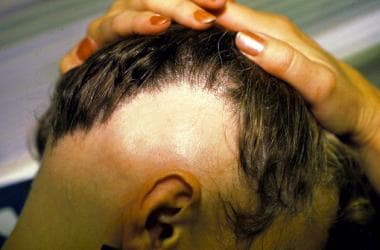
Central Centrifugal Cicatricial Alopecia
A type of hair loss known as central centrifugal cicatricial alopecia (CCCA) is the most common form of scarring alopecia in women of color. Although it is seen across all ages and races, middle-aged Black women are most affected. The same genetic and environmental factors in other types of alopecia are likely present, but researchers have observed a specific mutation in the PAD13 gene that could be linked to CCCA. Peptidyl arginine deiminase, type III (PADI3), is an enzyme responsible for modifying the proteins essential to hair formation. A team of scientists at the University of KwaZulu Natal found distinct variants in the PAD13 gene on several patients with CCCA that were of African descent. This research suggests that PAD13 mutations predispose individuals to CCCA, and then environmental factors such as damaging styling practices may be what trigger the disorder.

Join NAFPOC today
Together, we can solve the mystery of hair loss
one strand at a time!

